RNY Gastric Bypass
RNY Gastric Bypass is a type of bariatric surgery. Previously, it was used as the first choice in the surgical treatment of morbid obesity. However, when new methods became available, it turned into an alternative bariatric surgery technique applied only to necessary patients.
What is RNY Gastric Bypass?
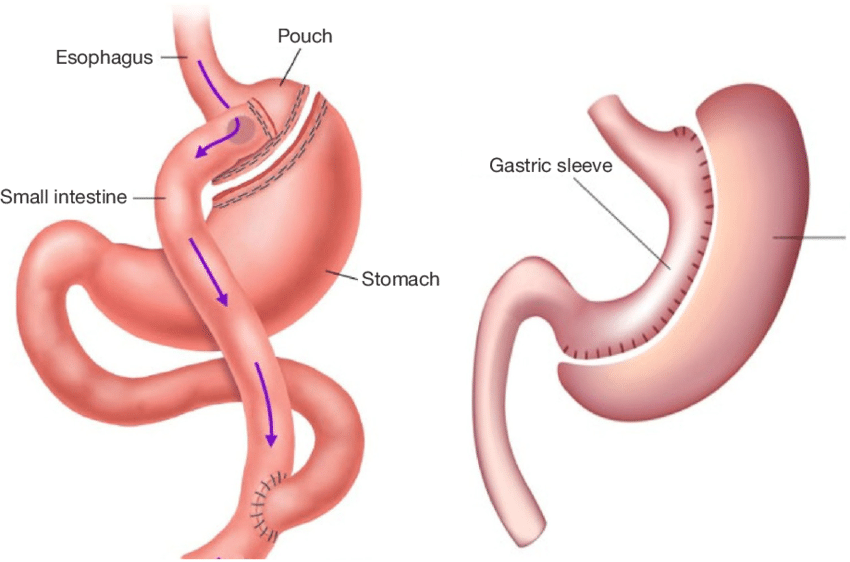
RNY gastric bypass functions with its restrictive effect due to the shrinkage of the stomach. In addition to stomach reduction, it has an absorption-reducing effect as a result of the food passing from the shrinking stomach directly to the small intestines.
How is RNY Gastric Bypass Performed?
RNY gastric bypass is performed laparoscopically, that is, with a closed technique. First of all, a small stomach pocket with a volume of approximately 50-70 cc is created from the cardia region, which is the initial part of the stomach. This pocket is separated from the main stomach with the help of staples. Then, joining this pocket (anostomosis) is performed 60-100 cm ahead of the small intestines. In the last stage, the small intestine end, which brings the remaining secretions from the stomach and duodenum, is joined to the main intestinal system. The remaining stomach, except for its pouch (pocket), is not removed. The operation time is approximately 1.5 hours.
Who Is RNY Gastric Bypass Surgery Performed?
RNY gastric bypass surgery is a surgical method that is generally applied in patients who may be harmed by tube stomach surgery such as severe reflux, in patients who are not suitable for sleeve gastrectomy surgery, or in restructuring of sleeve gastrectomy surgery. In patients where diabetes control is more important, it remains one step ahead of sleeve gastrectomy surgery.
RNY Gastric Bypass Risks
The risks of RNY gastric bypass may be higher than other surgical procedures. Most of the risks include the first two weeks after the operation and the operation process. There is no risk that may occur after 15 days after the surgery. The risks can be listed as follows;
- Bleeding risks: this risk is present in all surgical interventions. Its symptoms are intense dizziness and a drop in blood pressure.
- Embolism risks: this risk is minimized by giving blood thinners and wearing compression stockings 24 hours before the operation.
- Leakage risks: symptoms may manifest as severe increase in heart rate, patient tremors, severe abdominal pain, intense weakness.
- Risk of Dumping Syndrome: it is a side effect. It is the rapid passage of nutrients from the stomach to the small intestine. Symptoms are severe abdominal pain and diarrhea in the first half hour after feeding.
What Should Be Considered After RNY Gastric Bypass Surgery?
After RNY gastric surgery, 3-4 days of hospitalization is required. 1 week is enough time to return to normal life. Patients should be followed up regularly for the first year after surgery. In the first year, it is important that the intake of vitamins and minerals is sufficient. The patient should come to a regular monthly doctor and dietitian meeting.
Nutrition After RNY Gastric Bypass
Nutrition after RNY gastric surgery is as follows;
- Patients are fed with liquid for the first 8 days.
- The 8-day nutritional content is as follows; unsweetened fruit juices, protein-rich liquid drinks, lactose-free milk, unsweetened vegetable milk, grain-free soup enriched with meat and chicken juices.
- The next stage starts from the 9th day and lasts until the 22nd day.
- This process is the mash period. The patient's diet is expanded in the form of eggs, cheese, low-sugar fruit, vegetable purees with yogurt or minced meat, protein-enriched dairy products.
- Another phase starts as of the 23rd day. The patient adopts the standard and healthy nutrition model and applies the diet specially prepared for him by the dietitian.
What Not to Eat After RNY Gastric Bypass
The things that should not be eaten after RNY gastric bypass are as follows; soda, fast food, sugary foods, alcohol. The patient should adopt a healthy diet both immediately after the operation and in general. This makes it easier to lose weight. Continuing to eat healthy also ensures that she does not regain the weight she lost.